New article published by Taylor & Francis in their journal ‘Cogent Education’.

This paper evaluates the hybrid teaching practices at City St. George’s, University of London through a unique study of the experiences of staff and students in using these spaces for learning. The university was an early adopter of hybrid teaching in UK higher education and implemented it at scale and continues to use and develop this practice. Our evaluation focuses on practical insights gathered from two mixed-methods surveys, which included both qualitative and quantitative questions, conducted over the academic year 2021-2022. Additionally, staff focus groups were held to further explore survey findings. Responses highlighted the benefits of inclusivity in the hybrid teaching approach, though it also revealed mixed engagement levels among online students. The study also uncovered various challenges and technical issues faced by staff and students, providing valuable insights for improving future hybrid teaching practices. As this was an early implementation of this practice in a planned way, this snapshot analysis provides a useful baseline for understanding how hybrid teaching and experience will continue to develop. These findings will inform strategic decisions related to engagement, pedagogy, technology, space design, and staff development, as well as support a community of practice with other educational institutions.
“Hybrid learning has been a great progression forward in the world of teaching at higher levels of study. Hybrid allows for accessibility and inclusivity and gives flexibility to students with health reasons, childcare, carer responsibilities, financial reasons, and personal home life balance.”

“Learning is a Social Process”
Accredited by RIBA, this piece of work was written for Connection, one of the country’s leading workplace furniture manufacturers. In it I discuss how and why we believe learning is a social process, addressing the relationship between learning styles in education and how we see this correlate to create effective informal learning through interior and space design. It looks at understanding current and future students’ learning needs and how forthcoming design trends and technology are helping to influence these environments. Finally, the CPD shows some design trends for interiors that are emerging and considers their translation and psychological impact in education design, demonstrating how through smart furniture design and careful choice of material and colours can affect and improve learning and teaching outcomes.
‘Paper featured in Education in Practice’ journal.

This essay considers the types of physical environments that are required to enable effective learning and teaching in respect of a student centred, active and collaborative pedagogy. The paper examines the conclusions of a small-scale empirical research study that investigated the impact of new spatial designs at two universities in England. The methodology was mixed and resulted in a set of data from interviews of academic staff and student focus groups that regularly occupied the learning spaces, together with classroom observations and photography. A thematic data analysis resulted in conclusions that were intriguing, persuasive and thought provoking. It is clear that student’s preferences for their working environment are evolving.
They require a more informal atmosphere, closer connection with their tutors, more space within which to sit comfortably and sufficient writing surfaces to access. There are key social and psychological considerations to understand in order for an effective design and arrangement of learning spaces that encourage and enhance the learning experience.
The UK HE Learning Spaces Toolkit
I was one of the contributors to The UK HE Learning Space Toolkit has been produced by SCHOMS, AUDE and UCISA to help members from all three professional bodies share best practice and work more effectively when creating learning spaces. The authors would like to thank the numerous colleagues from across the professional associations, and others within the wider higher education community, who have contributed to the production of this Toolkit by sharing their experiences and reviewing content. It is hoped that this Toolkit will serve both as a practical guide and as a source of inspiration in the design of spaces that delight and motivate students, as well as they meet their functional needs.
Spatial designs and collaborative learning: an abstract from Masters thesis 2013
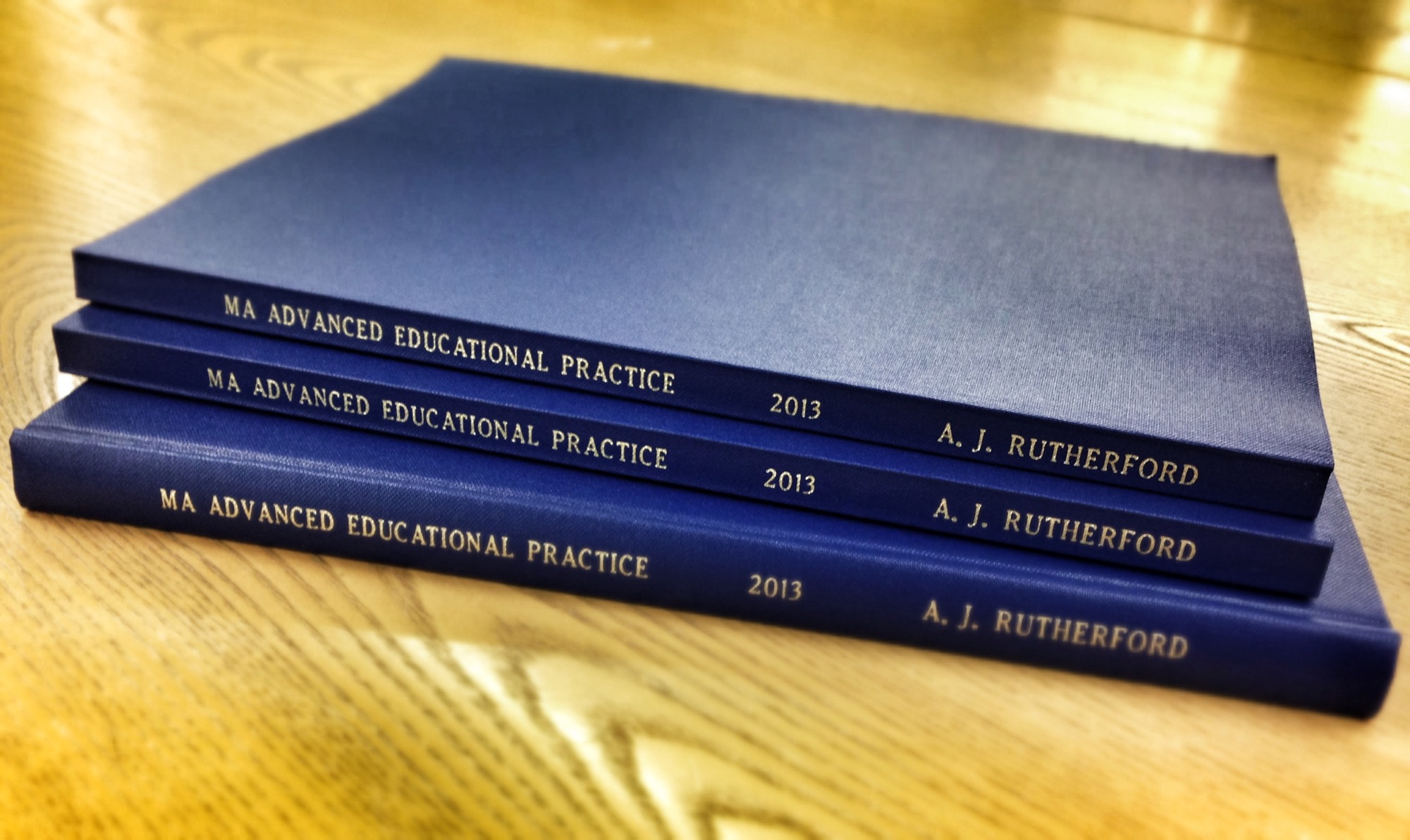
“Exploring the creation of physical environments in higher education that enable effective learning and teaching, particularly in respect of the constructivist paradigm of active and collaborative learning”
What types of physical environments do we need to create to enable effective teaching & learning, particularly in respect of the constructivist paradigm of active and collaborative learning? It is argued that UK Higher Education institutions should be supporting a student-focused pedagogy that is collaborative and engaging. I wanted to examine this influence and the impact of this approach on the learning environment by understanding the views of students and staff, and so to inform the development of future learning spaces that meet the accepted goal of effective group based learning.
This thesis is based on an empirical research study that investigating investigates the impact influence of new spatial designs on collaborative learning at two universities in England and considers the responses of those who regularly occupy these spaces. The research was completed in April 2013 where I adopted a qualitative approach to the investigation in order to learn from and improve the same practice within my own professional practice.
The ensuing data analysis resulted in five themes that allowed important conclusions to be drawn, these were behavioural, environmental, pedagogical, practical and social psychology. Clearly adequate space is a vital factor in creating successful learning environments, space to move and space to work and these can affect behaviour. So too are the environmental factors, often neglected, along with practical issues such as the selecting the right type of furniture that have can have a positive or detrimental impact on learning. There are also pedagogical considerations of teaching style and delivery, timetable management and professional development to investigate. And finally there are the thoughtful approaches to the social and psychological elements that need to exist in the creation of successful collaborative and active learning spaces. Overall, this study discovered that the spatial impact on group work was seen to be more effective, with students able to function more efficiently whilst producing more experimental, collaborative and creative work than in traditional, more formal classrooms.